
Technology & Sterilization
Dental technology and sterilization at Lumière
Digital equipment helps make diagnosis and treatment more accurate; controlled sterilization processes and water sources ensure every treatment is safe.
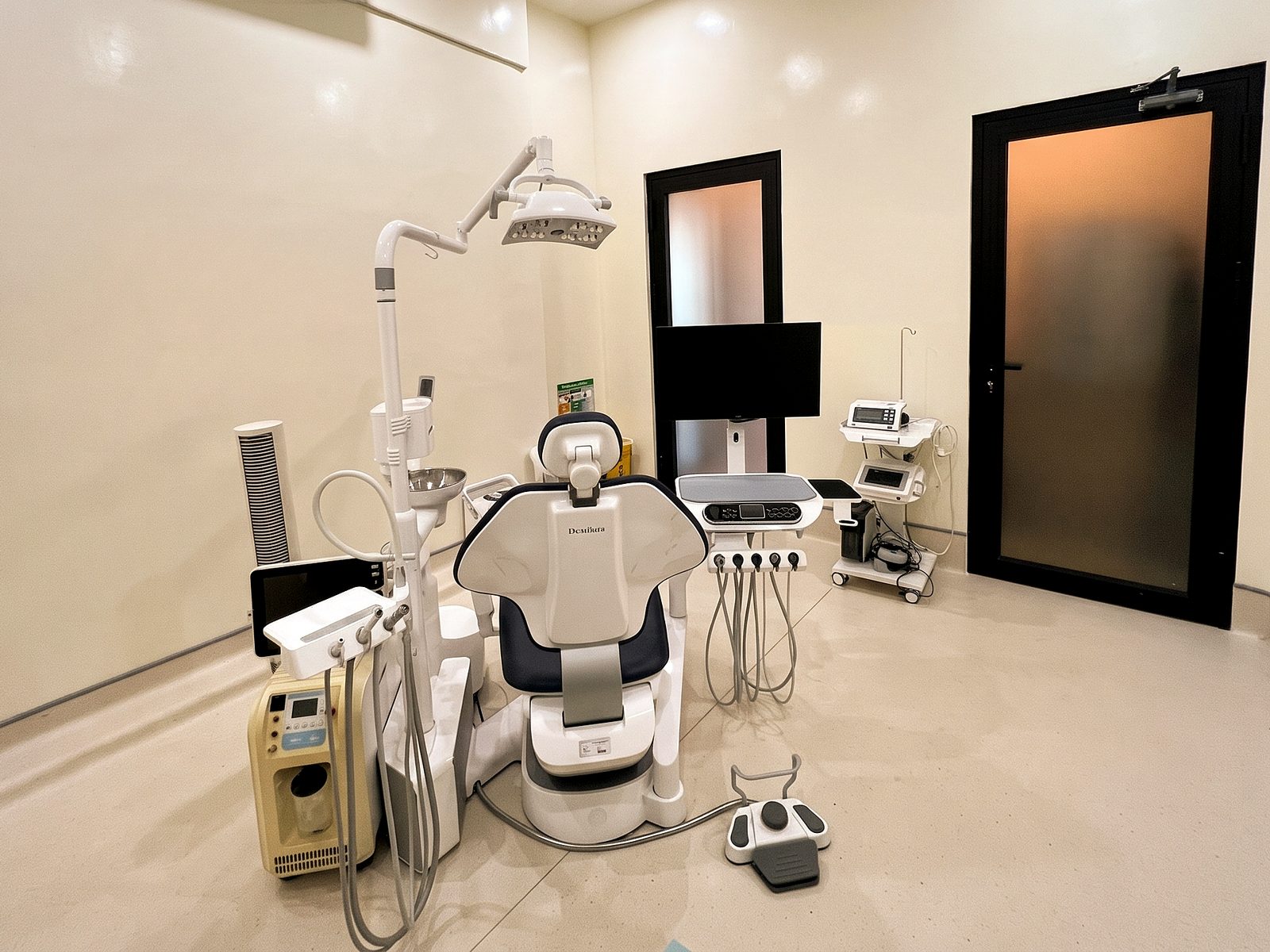
Dental water
Water in treatment: purified, potable, periodically tested
- RO filtration from the source for the entire dental water system
- Meets purified medical-grade water standards, potable
- Periodic water sampling for testing
Water sprayed from handpieces, scalers, and air-water syringes goes directly into the mouth, including into gum areas and wounds. The water lines of dental chairs are narrow and long, and water flows slowly, making it easy for biofilm to form if the water source is not treated and monitored. The U.S. Centers for Disease Control and Prevention (CDC) recommends that water used in routine dental treatment must be treated to meet drinking water standards.
At Lumière, water for the dental chair system is reverse osmosis (RO) filtered right from the source, meeting purified medical-grade water standards and is potable. Water is sampled periodically for testing to ensure consistent quality.
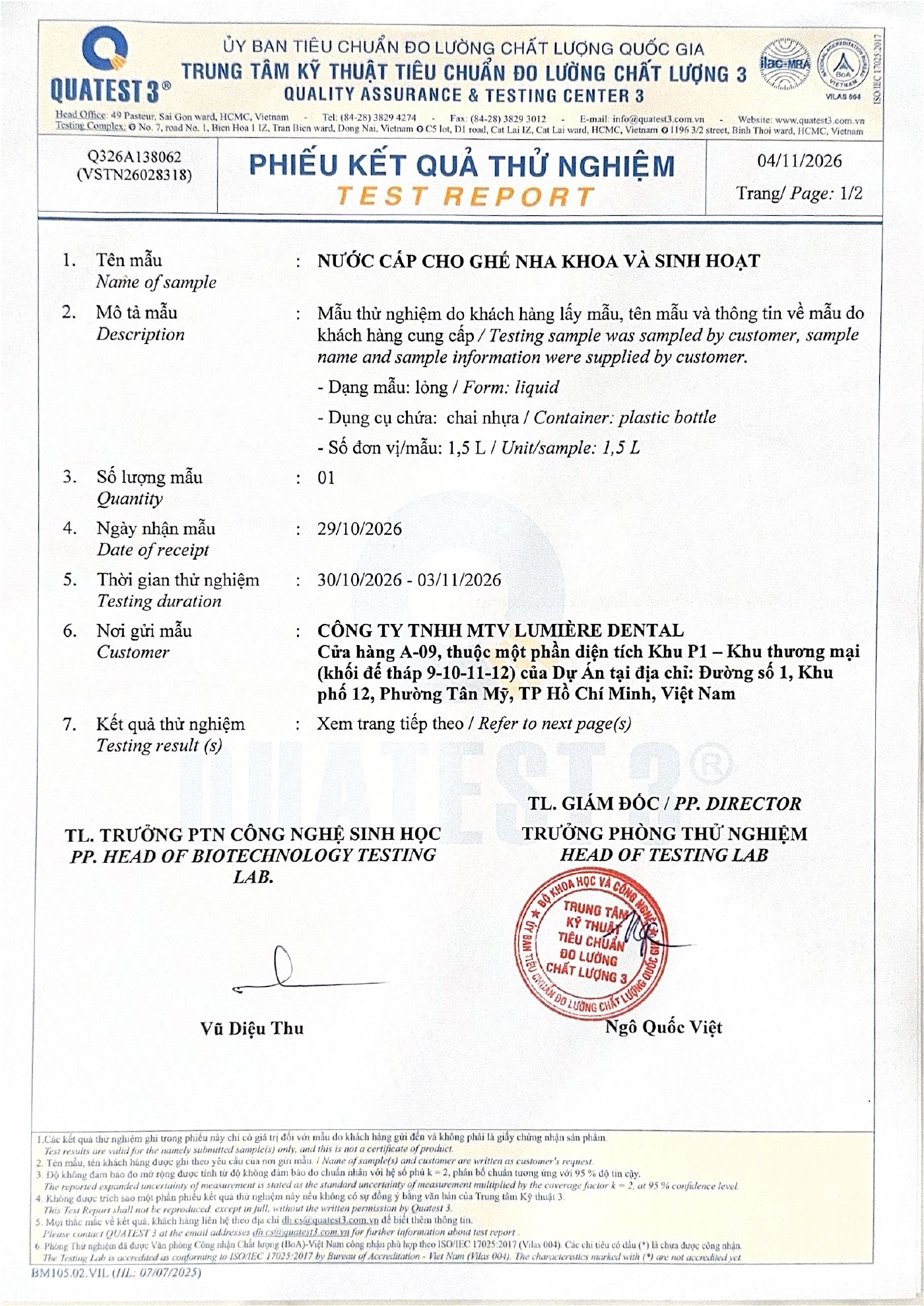
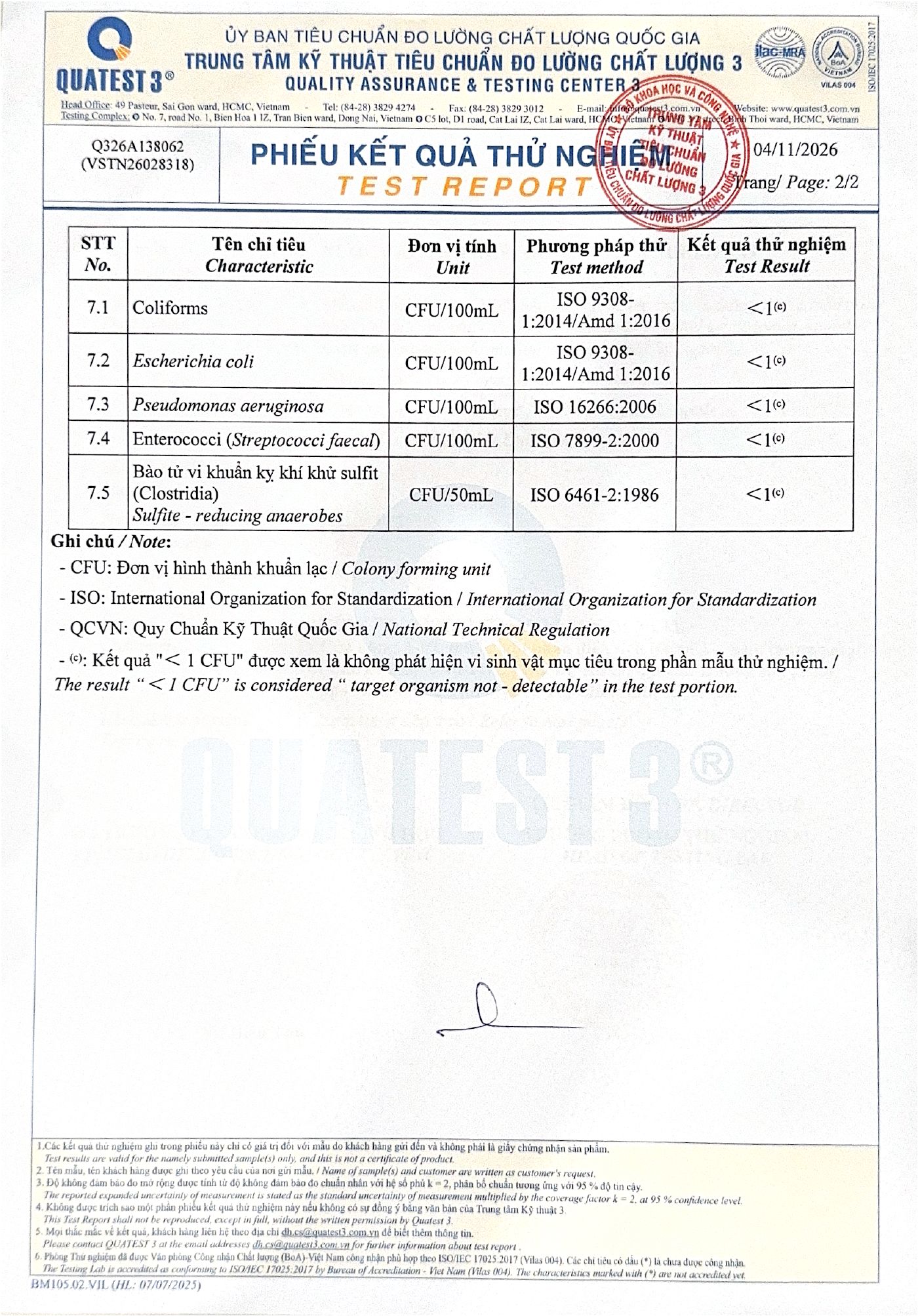
Most recent test results – November 2026
Water samples supplied to the dental chairs were collected by the clinic and sent to the Quality Assurance and Testing Center 3 (QUATEST 3), a laboratory accredited according to ISO/IEC 17025, tested from October 30 to November 3, 2026.
- Coliforms: not detected
- Escherichia coli: not detected
- Pseudomonas aeruginosa: not detected
- Enterococci: not detected
- Sulfite-reducing anaerobic bacteria spores (Clostridia): not detected
Test result report number Q326A138062, dated November 4, 2026. Results are valid for the submitted sample only.
Dental cleaning
Non-contact dental cleaning with air-polishing and ultrasound
Instead of scaling the entire arch with instruments, plaque is stained to be clearly visible, then removed primarily using a stream of air, water, and fine powder. Ultrasonic tips are used only where tartar remains, making the cleaning session gentle on teeth, gums, implants, and restorations.
The procedure is based on the principles of Guided Biofilm Therapy, which is widely applied in preventive dentistry.
Read the article: How is non-contact dental cleaning different from conventional scaling?
- Assessment. The dentist examines your teeth, gums, and implants (if any); you rinse your mouth with an antiseptic solution before cleaning.
- Plaque staining. The staining solution makes the biofilm visible, clearly showing areas that have not been brushed clean.
- Guidance. The dentist points out areas with remaining plaque and instructs you on how to brush, floss, and use appropriate interdental brushes.
- Air-water-powder cleaning. Removes biofilm, stains, and newly formed tartar on teeth, near the gums, around implants, and brackets; the nozzle does not touch the teeth.
- Ultrasonic cleaning for remaining tartar. A thin ultrasonic tip is only used for the tartar remaining after the air-polishing step.
- Check-up. Re-examine the entire tooth surface to ensure no plaque or tartar remains.
- Follow-up appointment. A periodic cleaning schedule is recommended based on each person's risk level.
Three types of powder for three purposes
The clinic uses three types of powder for different purposes; the dentist selects the powder based on the surface to be cleaned.
Sodium bicarbonate powder
Larger particles, used to remove stubborn stains from coffee, tea, and tobacco on the enamel surface.
Glycine powder
Fine particles, low abrasivity, used to clean plaque near the gums, on the root surface, and around restorations.
Erythritol powder
Very fine particles, used to clean biofilm around implants, brackets, and in sensitive areas.
Digital diagnosis and treatment planning
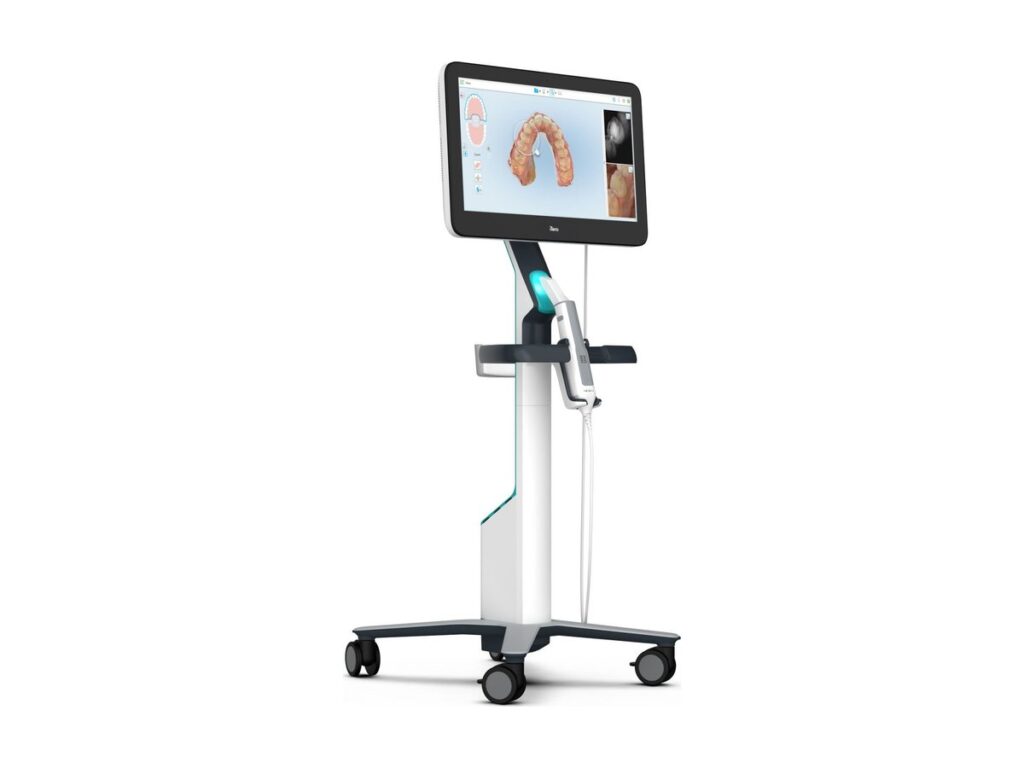
iTero 5D intraoral scanner
Records the dental arch using 3D imaging instead of impression trays, combined with near-infrared (NIRI) images to help detect and monitor interproximal caries without X-rays.
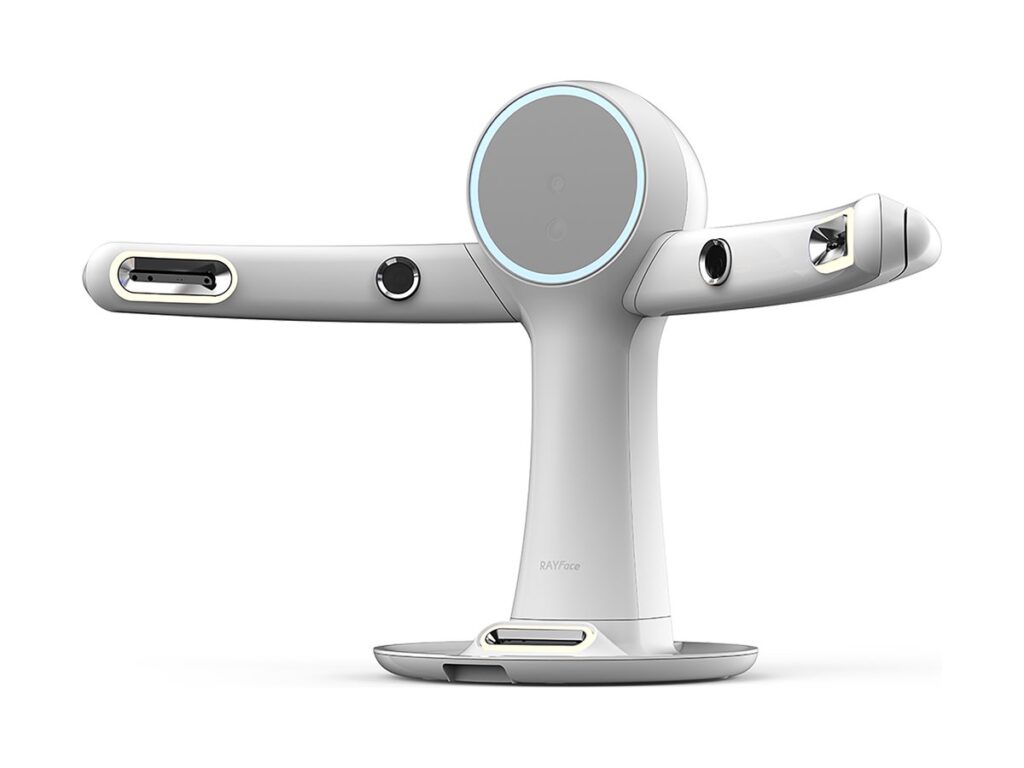
RAYFace 3D facial scanner
Six cameras capture the entire face in about 0.5 seconds, recording a natural smile to design teeth that harmonize with the face and simulate soft tissue changes such as lips and cheeks.
Implant surgery and tooth extraction
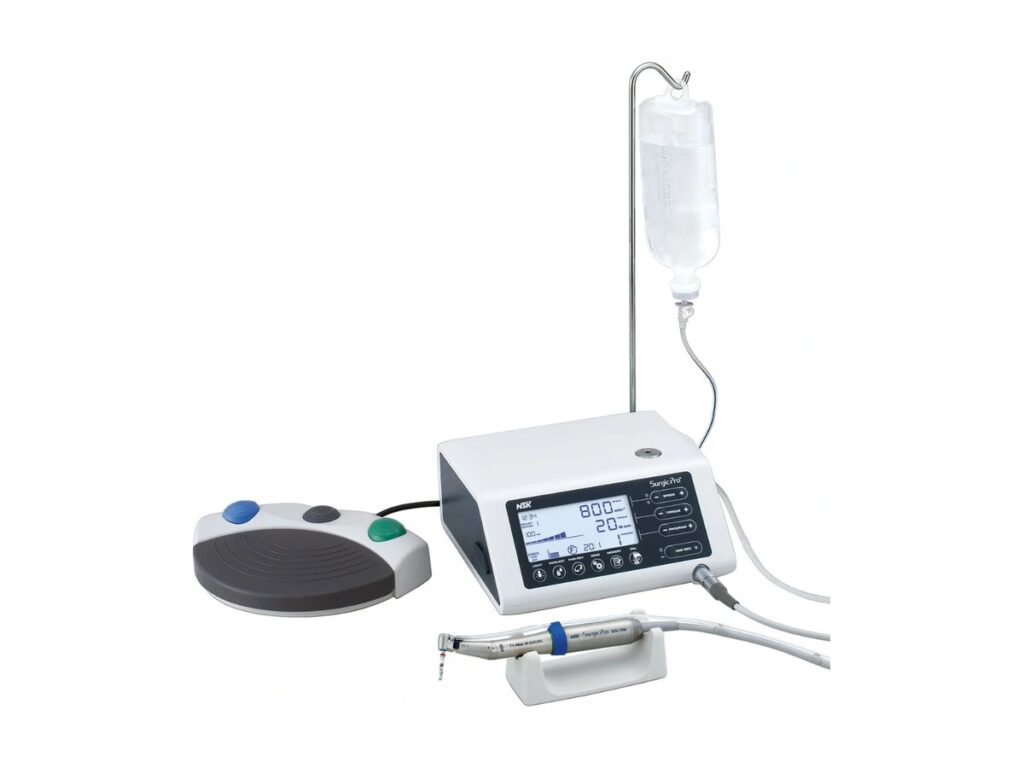
NSK Surgic Pro implant surgical motor (Japan)
Surgical motor for precise control of speed and torque during site preparation and implant placement.
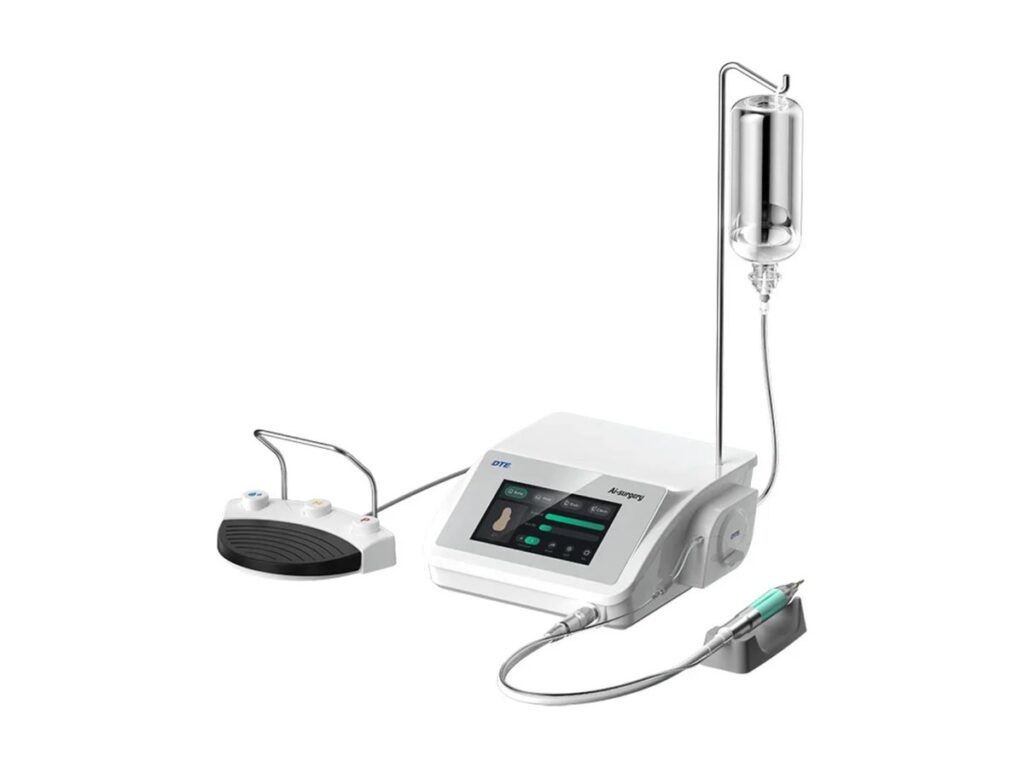
Ai-Surgery ultrasonic surgical unit (DTE – Woodpecker)
Fourth-generation piezo surgery device, using ultrasonic vibration for bone cutting, minimizing soft tissue damage. Used for atraumatic tooth extraction, alveolar bone preservation, and supporting bone cutting in implant procedures such as bone grafting and sinus lifts.
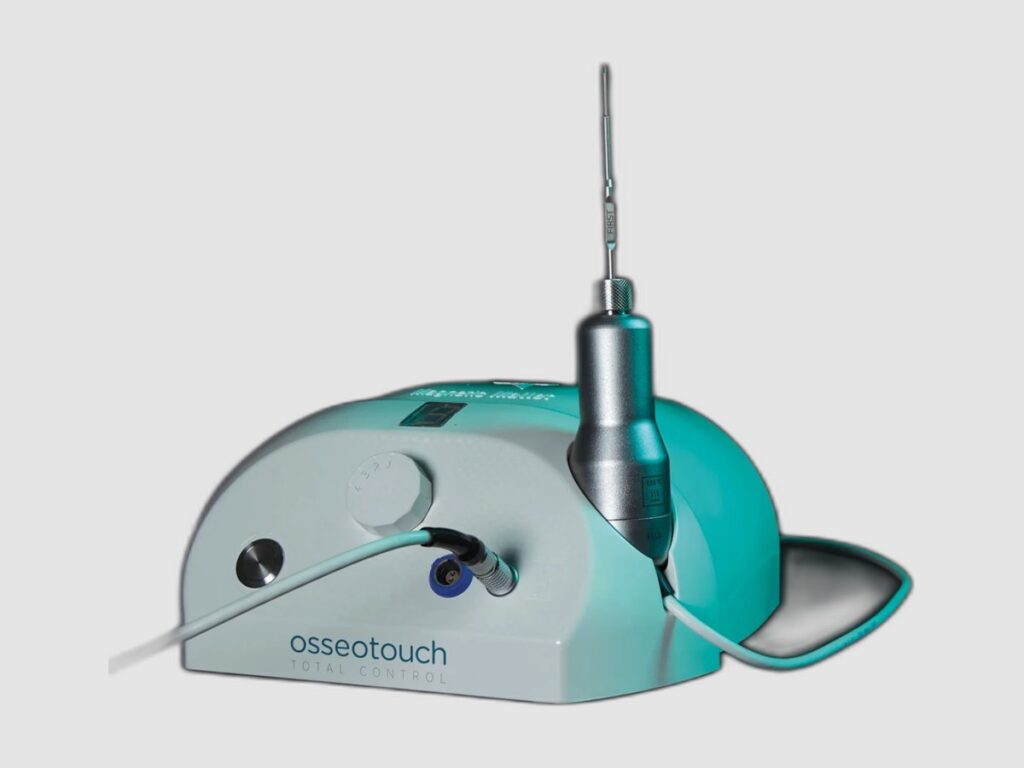
Magnetic Mallet surgery device (Osseotouch, Italy)
Technology for drill-free implant site preparation: magnetic pulses act on osteotomes of increasing diameter, expanding and compacting the bone instead of using drills. Suitable for those who fear the sound of drills; the doctor will evaluate bone quality via CT scan to determine if it is applicable to your case.
Teeth cleaning and root canal treatment
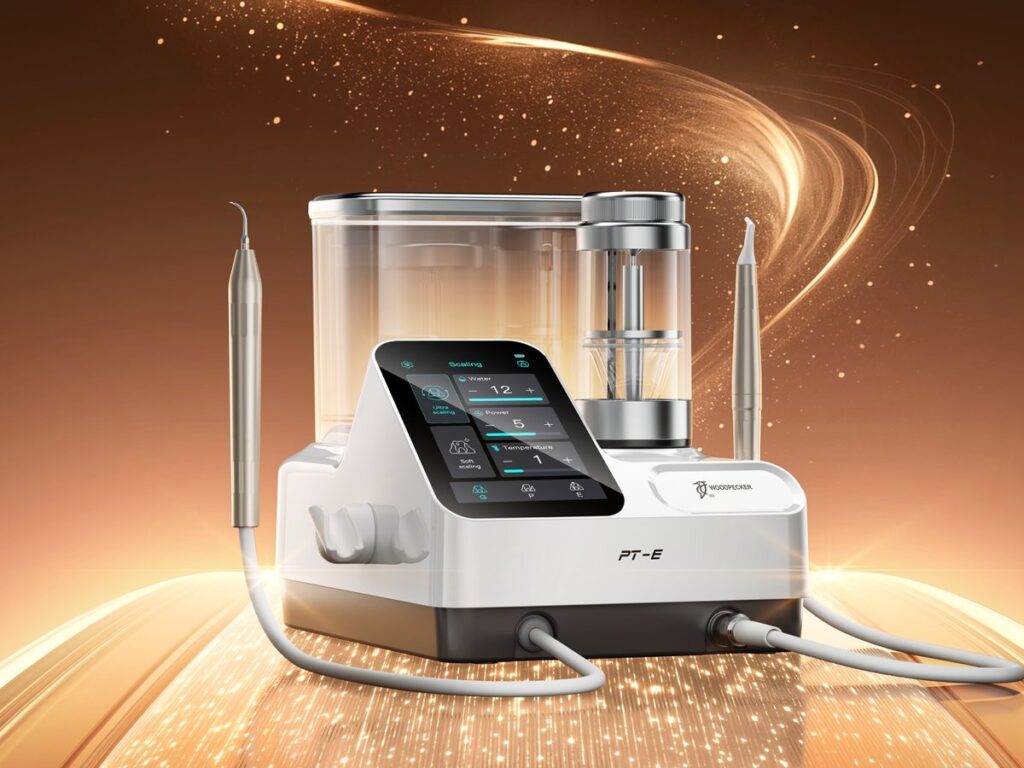
Woodpecker PT-E: non-contact tooth cleaning using air-polishing and ultrasonics
Warm water for both the nozzle and ultrasonic tip. Plaque is stained to be clearly visible, then cleaned using an air-water-powder stream (three types of powder for three purposes); the nozzle does not touch the teeth, and the ultrasonic tip is only used where tartar remains. View the 7-step procedure.
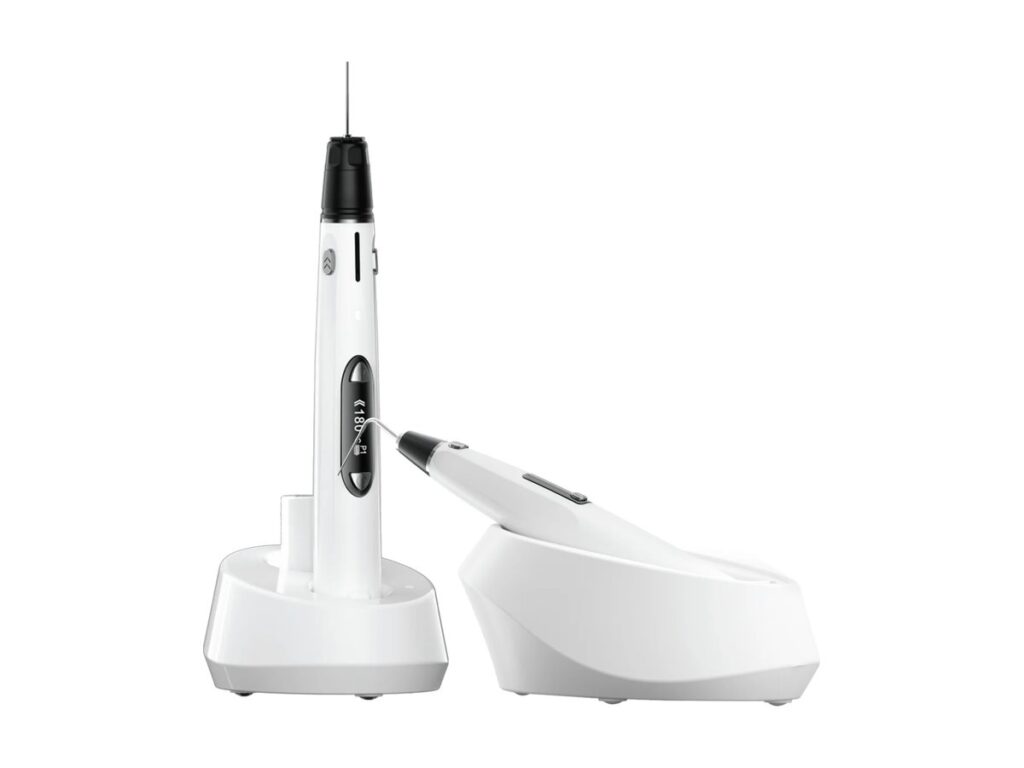
Root canal treatment system
Irrigation solutions activated by ultrasonic vibration to clean root canals; obturation using melted gutta-percha (warm vertical compaction) combined with heat plugging to seal the root canal system.
Instrument sterilization
Medical-grade ultrasonic cleaner
Cleans instruments before sterilization, removing blood and debris from areas difficult to clean by hand.
Class B autoclave
Pre-vacuum cycle before sterilization, sterilizes packaged instruments and hollow instruments such as handpieces.
Book an appointment